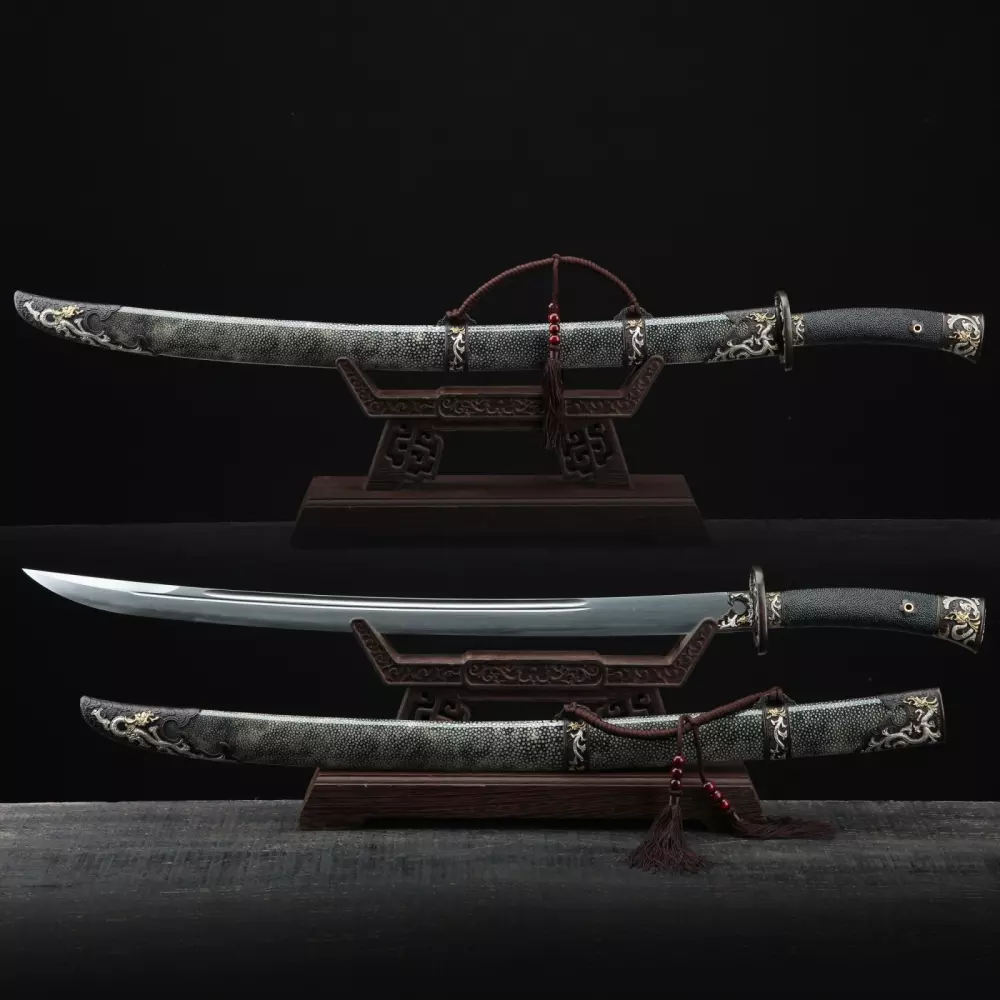
Throughout human history, few objects have captured imagination, pride, and craftsmanship the way swords have. Among the countless sword designs created across different cultures, two stand out as timeless icons: the Saber Sword and the Damascus Sword. Both have their own heritage, fighting style, metallurgy, and visual appeal, making them favorites of collectors, martial artists, and historians. In this blog post, we explore their origins, features, uses, and why these two blades still fascinate people in the modern world.
The Saber Sword: A Symbol of Speed, Curvature, and Military Prestige
The Saber Sword is instantly recognizable because of its elegant, curved blade. While straight swords dominated much of early history, the saber revolutionized mounted combat. Its design made it powerful, fast, and highly effective for cavalry warriors.
Origins of the Saber
The earliest forms of the saber emerged in Central Asia among nomadic horsemen. These warriors needed a blade that could deliver slashing cuts while riding at high speed. A curved blade proved far more effective than a straight one, allowing riders to swing and slice without getting stuck in an opponent.
From Asia, the saber spread into Eastern Europe, the Middle East, and eventually Western Europe. By the 18th and 19th centuries, it became the signature weapon of European cavalry units, symbolizing honor, rank, and martial skill.
Key Features of the Saber Sword
- Curved Blade: Designed primarily for cutting and slashing.
- Single Edge: Most sabers have one sharpened edge, which improves durability and safety for the wielder.
- Lightweight Build: Helps in delivering quick, powerful strikes.
- Protective Hilt: Often includes a guard or knuckle-bow to protect the hand.
These features made the saber ideal for cavalry charges, duels, and fast close-range combat.
Famous Saber Variations
The saber has many regional variations, each with its own identity:
- The Scimitar: A Middle Eastern saber with deep curvature.
- Shashka: A Russian/Cossack saber known for its straight-back blade and speed.
- Mameluke Sword: A Middle Eastern design adopted by military officers, especially in the U.S. Marine Corps.
- European Cavalry Saber: Widely used in Napoleonic wars and by armies worldwide.
Each variation reflects different martial traditions, but all share the defining elegance and function of the curved blade.
Modern Use of the Saber
Today, saber swords are used in:
- Historical reenactments
- Martial arts like HEMA
- Ceremonial military events
- Collecting and display
- Stage performance and film
While they no longer dominate battlefields, saber swords remain symbols of leadership and tradition.
The Damascus Sword: A Masterpiece of Metallurgy and Myth
If the saber is famous for its shape, the Damascus sword is legendary for its material. Damascus steel is one of history’s greatest metallurgical achievements—famous for its wave-like patterns, incredible sharpness, and strength.
Origins of Damascus Steel
Damascus steel can be traced back more than 2,000 years, originating in regions surrounding present-day India, Iran, and Syria. The term “Damascus” refers to either:
- The city of Damascus, known for trading high-quality blades,
or - The distinctive water-patterned steel that resembles flowing rivers.
The most famous version is Wootz steel, a high-carbon steel made using ancient, highly secretive techniques. Smiths heated iron and carbon-rich materials slowly in crucibles, allowing carbon to penetrate deeply into the metal. The result was steel that was both extremely hard and flexible—qualities rarely found together.
Characteristics of Damascus Swords
Damascus swords are celebrated for:
- Distinctive Patterns: Swirls, waves, ladders, raindrops—each blade has a unique design.
- Superior Sharpness: Historically capable of slicing through armor and even other swords.
- High Durability: Resistant to breaking or chipping.
- Flexibility: Able to bend slightly without snapping.
- Aesthetic Beauty: The patterns make every blade look like a work of art.
These qualities created legends around Damascus swords, including myths that they could cut through rocks or slice floating silk scarves.
Why Ancient Damascus Steel Became Rare
By the 18th century, the original formula for true Damascus/Wootz steel was lost. Reasons include:
- Decline of trade routes
- Loss of ore sources rich in specific minerals
- Secret techniques not passed down
- Wars and destruction of workshops
Modern Damascus is typically pattern-welded, meaning layers of steel are folded and forged to recreate the historical patterns. Though different from ancient Wootz steel, modern Damascus still offers excellent performance and beauty.
Damascus Swords in History
Damascus blades were prized across:
- Middle Eastern warriors and armies
- Crusades-era knights
- Indian and Persian fighters
- Ottoman and Mughal empires
Owning a Damascus sword was a mark of elite status, craftsmanship, and wealth.
Saber Sword vs Damascus Sword: How Do They Compare?
Though both are iconic, saber swords and Damascus swords belong to entirely different categories.
1. Design Philosophy
- Saber: Defined by a curved blade and cavalry use.
- Damascus: Defined by steel composition and forged patterns; may be straight or curved depending on style.
2. Combat Style
- Saber: Fast, slashing attacks; ideal for mounted warriors.
- Damascus Sword: Depends on the shape—it could be a straight longsword, curved shamshir, or hybrid—but always built for strength and cutting power.
3. Visual Appeal
- Saber: Sleek, elegant profile.
- Damascus: Complex, artistic metal patterns that make each blade unique.
4. Historical Prestige
- Saber: Celebrated for military tradition and cavalry tactics.
- Damascus: Revered for rarity, mythical strength, and unmatched metallurgy.
Both swords represent peak craftsmanship from their cultures but in completely different ways.
Why Collectors Love These Swords Today
Whether someone loves history, martial arts, or craftsmanship, both saber and Damascus swords offer something special:
- Display pieces that look stunning.
- Functional blades for practitioners of sword arts.
- Investment items—high-quality swords increase in value.
- Cultural significance, connecting owners with centuries of tradition.
Damascus swords appeal to those who appreciate intricate metalwork, while saber swords are perfect for collectors drawn to military history.
Conclusion
The Saber Sword and Damascus Sword may come from different traditions, but both represent the peak of human skill, artistry, and innovation. Sabers showcase the evolution of battlefield tactics, while Damascus swords reveal the secrets of ancient metallurgy. Today, they stand as symbols of courage, craft, and cultural heritage—proof that even in a world dominated by modern technology, the legacy of the sword continues to inspire.
Gluco6 is a natural, plant-based supplement designed to help maintain healthy blood sugar levels.
Nitric Boost Ultra is a daily wellness formula designed to enhance vitality and help support all-around performance.
NerveGenics is a naturally formulated nerve-health supplement created to promote nerve comfort, cellular energy support, antioxidant defense
ProstAfense is a premium, doctor-crafted supplement formulated to maintain optimal prostate function, enhance urinary performance, and support overall male wellness.
GL Pro is a natural dietary supplement formulated to help maintain steady, healthy blood sugar levels while easing persistent sugar cravings.
NerveCalm is a high-quality nutritional supplement crafted to promote nerve wellness, ease chronic discomfort, and boost everyday vitality.
Prostadine concerns can disrupt everyday rhythm with steady discomfort, fueling frustration and a constant hunt for dependable relief.
Prosta Peak is a high-quality prostate wellness supplement formulated with a comprehensive blend of 20+ natural ingredients and essential nutrients to support prostate health
Visium Pro is an advanced vision support formula created to help maintain eye health, sharpen visual performance, and provide daily support against modern challenges such as screen exposure and visual fatigue.
ViriFlow is a dietary supplement formulated to help maintain prostate, bladder, and male reproductive health. Its blend of plant-based ingredients is designed to support urinary comfort and overall wellness as men age.