Unexplained ancient technology represents one of the strongest challenges to the conventional timeline of human technological development. Unlike myths or theories about lost civilizations, these mysteries are based on physical objects that can be examined, tested, and analyzed using modern scientific methods.
Across different cultures and continents, archaeologists have uncovered artifacts whose complexity appears far beyond what mainstream history says ancient societies should have been capable of producing. Individually, these discoveries are remarkable. Together, they suggest that ancient civilizations may have possessed far more advanced scientific and engineering knowledge than previously believed.
The Antikythera Mechanism
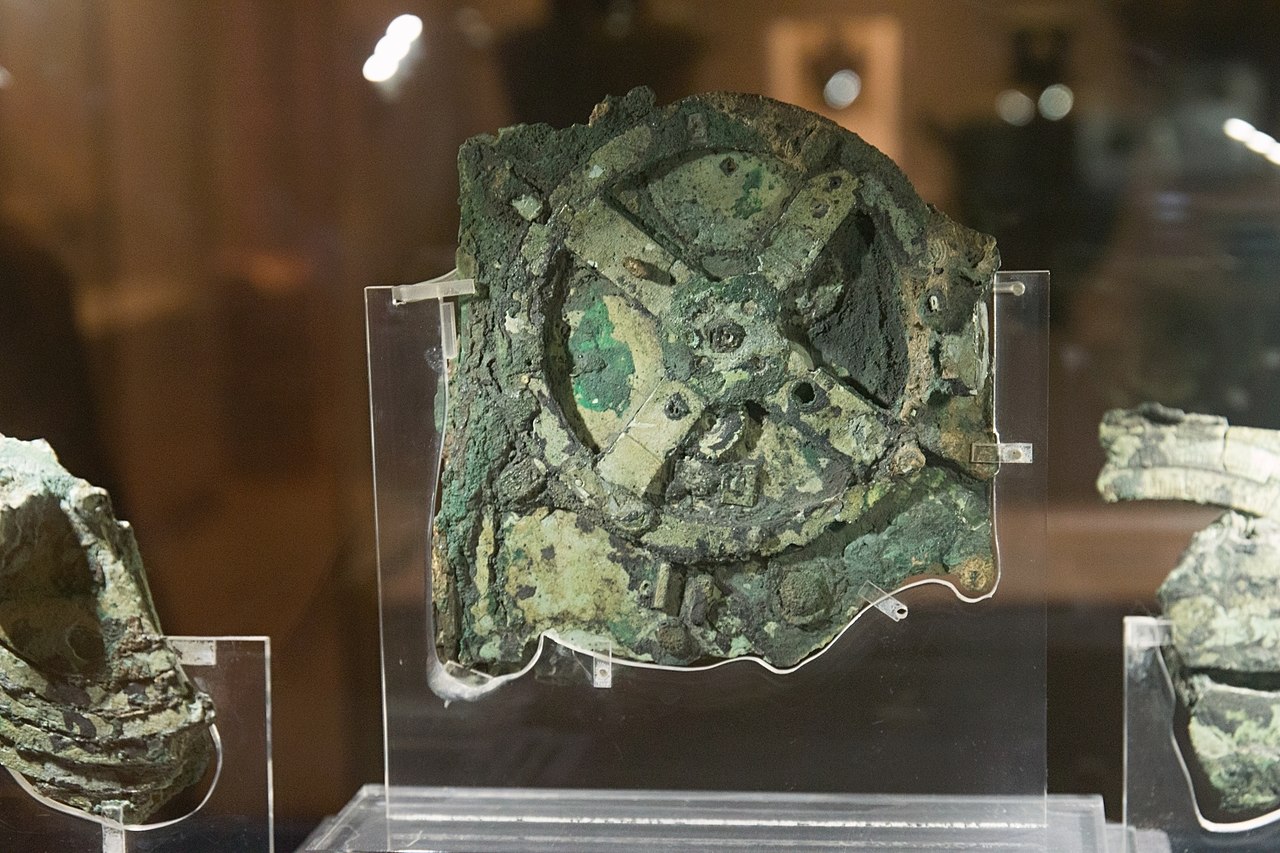
The Antikythera Mechanism is often considered the most extraordinary example of unexplained ancient technology. Recovered from a Greek shipwreck and dated to around 100 BCE, the device was eventually identified as a highly sophisticated mechanical computer containing dozens of interlocking bronze gears.
Scientific analysis revealed that the mechanism could track the movements of the sun, moon, and planets, predict eclipses, and calculate astronomical cycles with astonishing precision. Its engineering sophistication was not matched again in Europe until mechanical astronomical clocks appeared more than a thousand years later.
The Baghdad Battery
The Baghdad Battery is another famous ancient mystery. Discovered near Baghdad and dated between 250 BCE and 224 CE, the object consists of a terracotta jar containing a copper cylinder and an iron rod.
When filled with acidic liquid such as vinegar or grape juice, replicas of the device generate measurable electrical current. Engineers and researchers have repeatedly confirmed this capability through experiments.
The exact purpose of the Baghdad Battery remains unknown. Some researchers believe it may have been used for electroplating jewelry or ceremonial objects, while others suggest medicinal or ritual uses. Regardless of its purpose, it remains difficult to explain why an ancient civilization possessed a functional electrochemical device centuries before electricity was formally understood.
The Saqqara Bird
Among the most intriguing examples of unexplained ancient technology is the Saqqara Bird, a wooden artifact discovered in Egypt and dated to approximately 200 BCE.
Unlike traditional Egyptian bird carvings, the Saqqara Bird features wings and body proportions that closely resemble aerodynamic designs used in modern gliders. Some aeronautical engineers have argued that the object demonstrates an advanced understanding of airflow and stability.
Replicas of the carving have shown genuine gliding capability when modified with stabilizing tail structures. Whether intentional or accidental, the artifact continues to raise questions about ancient Egyptian knowledge of flight principles.
The Iron Pillar of Delhi
The Iron Pillar of Delhi is one of the clearest examples of advanced ancient metallurgy. Standing in India for more than sixteen centuries, the pillar has resisted corrosion despite constant exposure to heat, humidity, and monsoon conditions.
Modern metallurgical studies found that its unique composition creates a protective surface layer that prevents rust from spreading. The level of metallurgical control required to achieve this effect appears far ahead of what conventional history attributes to ancient metalworkers.
The Dendera Reliefs
The Dendera Reliefs in Egypt remain one of the most debated ancient mysteries. The carvings depict elongated bulb-like objects connected to structures that some engineers believe resemble electrical lighting systems.
Mainstream Egyptologists interpret the carvings as symbolic religious imagery, while alternative researchers argue they may represent advanced technological concepts. Although no consensus exists, the visual similarities to electrical devices continue to fuel debate about the possibility of forgotten ancient knowledge.
Final Thoughts
Ancient artifacts such as the Antikythera Mechanism, Baghdad Battery, Saqqara Bird, Iron Pillar of Delhi, and Dendera Reliefs continue to challenge conventional explanations of human technological history. Whether these objects represent isolated innovations or evidence of lost scientific traditions, they demonstrate that the ancient world may have been far more advanced than we once believed.