Search “home improvement” on any major podcast platform and you’ll find thousands of episodes. Tips on renovations, interior design, mortgage rates, smart appliances. The content is endless.
Search “what to do after a traumatic event in your home” and the results go quiet very fast.
That gap is worth paying attention to, because the situation itself is not rare. Mold discovered during a renovation. An unattended death. A crime scene that emergency services responded to and then left behind. These are events that affect real homeowners every year, and the conversation about what comes next is almost entirely absent from the places where people go to learn things.
A Market Growing Faster Than the Conversation Around It
The numbers tell a story that the podcast ecosystem hasn’t caught up to yet.
The U.S. home decontamination services market generated $1.35 billion in revenue in 2024 and is projected to reach $2.34 billion by 2030, growing at a compound annual growth rate of 9.7% according to Grand View Research. The broader biohazard and crime scene cleanup market is forecast to reach $9 billion globally by 2033. Residential properties, driven by incidents including unattended deaths and hoarding situations, represent one of the largest and fastest-growing segments within that market.
Yet public awareness of these biohazard cleanup services remains remarkably low. Most homeowners only learn this industry exists at the moment they need it, which is precisely the wrong time to be starting from zero.
The FBI reported more than 22,000 murders in 2022 alone, each leaving behind a scene requiring professional attention. Add suicides, accidental deaths, and traumatic accidents, and the number of residential incidents requiring certified cleanup runs well into the tens of thousands each year. The CDC estimates over 50,000 unattended deaths annually in the United States. One in five U.S. homes has mold at detectable levels, according to the EPA. These are not edge-case statistics.
The Awareness Problem Is the Real Story
What makes this topic genuinely compelling for podcast audiences is not the industry itself. It is the gap between how common these situations are and how little preparation most homeowners have for them.
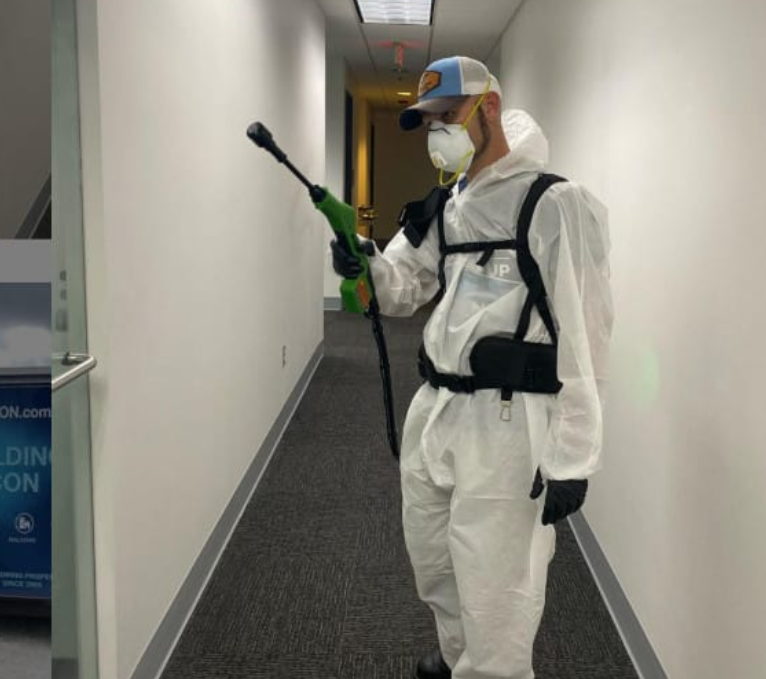
Emergency responders stabilize. They do their job and they leave. What follows is almost entirely the homeowner’s responsibility, and most people discover this at the worst possible moment. DIY attempts are common and frequently make the situation worse. Mold disturbed without proper containment spreads. Biohazard material handled without certification creates ongoing health liability. Delays in contacting professionals complicate insurance claims and extend the time before a space is safe to occupy again.
A 2023 study found that field-based forensic professionals experience PTSD at a rate of 29%, significantly higher than the general population. If the people trained to do this work carry that weight, the toll on untrained homeowners attempting to manage it themselves is difficult to overstate.
A Voice That Fits This Conversation
Katie Wilson, CEO of Spaulding Decon, sits at an intersection of operational leadership and frontline service delivery that is rare in this industry. Her background includes scaling an organization from two employees to more than 30 across four departments, and her specific expertise in insurance coordination addresses one of the most practical pain points homeowners face after a crisis.
Most people have no idea their homeowner’s insurance may cover professional biohazard remediation. Even fewer know that delays in filing, or incomplete documentation, can significantly reduce or deny a claim. That is exactly the kind of information that sticks with a podcast listener.
“Most families we work with had no idea this type of service existed before they needed it,” Wilson says. “By the time they call, they’ve usually already tried to manage something themselves, or waited longer than they should have out of uncertainty. The goal is to make sure they know there’s a clear, supported path forward and that they don’t have to figure it out alone.”
Why This Belongs in the Podcast Space Now
Podcast audiences are not passive. They are people actively trying to solve problems or get ahead of situations before those situations find them. Homeownership content, personal finance shows, estate planning, emergency preparedness, and mental health podcasts all have audiences with a direct and practical stake in understanding what happens when a home becomes a crisis site.
The subject crosses verticals in a way that makes it genuinely flexible as a guest conversation topic. And the voices who can speak to it with both technical credibility and human warmth are few. That combination of broad relevance and limited representation is exactly what produces episodes that keep pulling new listeners months or years after they air.
The conversation is overdue. The audience is already there.
Sources
- Grand View Research — U.S. Home Decontamination Services Market, 2024
- Market Report Analytics — Biohazard and Crime Scene Cleanup Market Forecast 2025–2033
- 360iResearch — Biohazard & Crime Scene Cleanup Market Size 2026–2032
- FBI Uniform Crime Report — Murder and Non-Negligent Manslaughter Statistics, 2022
- U.S. Centers for Disease Control and Prevention (CDC) — Unattended Death Estimates
- U.S. Environmental Protection Agency (EPA) — Mold in Homes Statistics
- TraumaServices.com — Why Crime Scene Cleanup Is America’s Forgotten Public Service, 2025
- Katie Wilson, CEO, Spaulding Decon — direct quote, 2026