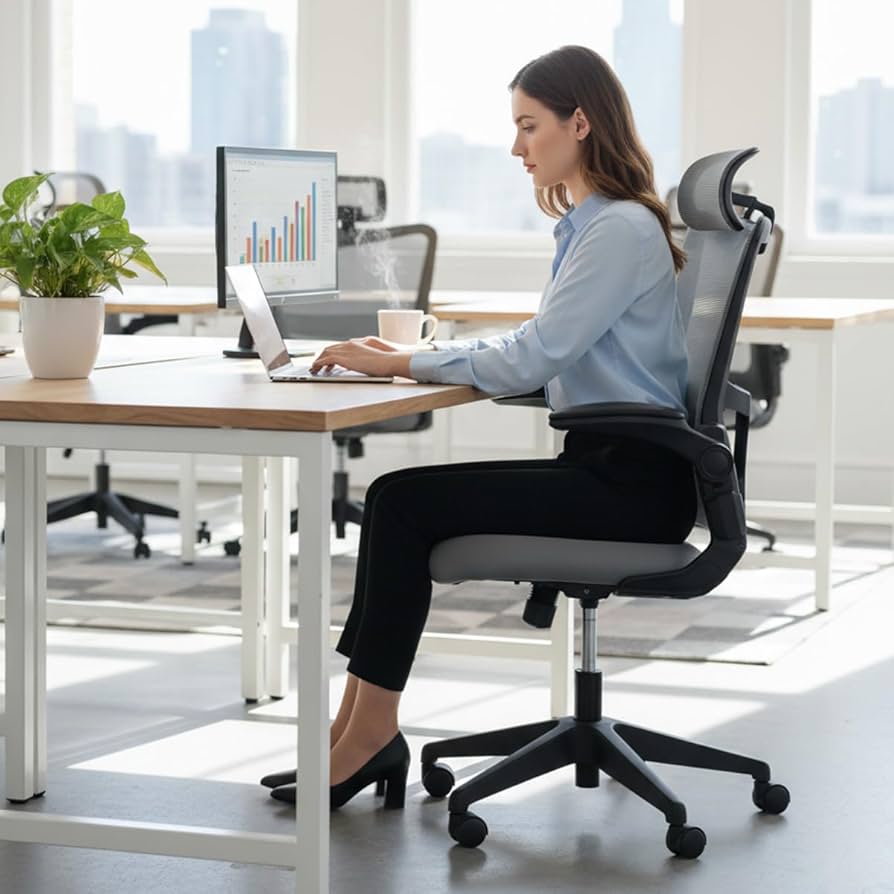
Every morning, you strap on your smartwatch or clip your fitness tracker to your waistband, eager to count steps and monitor calories. Meanwhile, the object supporting you for eight hours straight goes completely unnoticed. Your office chair isn’t just a piece of furniture anymore. It’s become a sophisticated piece of technology that’s constantly reading your body, making micro-adjustments, and attempting to communicate valuable information about your health and work habits.
The best ergonomic office chairs today contain an impressive array of mechanisms designed to respond to your unique physiology. Pressure sensors detect weight distribution. Pneumatic cylinders adjust to your movements. Lumbar support systems flex and pivot based on how you shift your spine. Yet most people never think twice about the complex engineering happening beneath them, even as their fitness trackers ping them with reminders to stand up.
Decoding the Messages Your Chair Sends
Your chair talks to you constantly, but the language is subtle. That slight discomfort in your lower back at 2 PM? Your chair is telling you that you’ve been leaning forward too long, straining against its support system rather than using it. The way your armrests feel too high suddenly? You’ve been tensing your shoulders, and your chair is making you aware of the posture shift.
Unlike fitness trackers that deliver data through screens and notifications, chairs communicate through sensation and comfort. When you find yourself constantly adjusting the seat height, your chair is revealing that you’re restless or that your desk setup needs modification. When one side of the seat feels more worn than the other, it’s showing you a postural imbalance you might not have noticed otherwise.
The tension knob on your chair’s tilt mechanism provides surprisingly sophisticated feedback. If you find yourself constantly tightening it throughout the day, your chair is indicating that you’re feeling stressed or anxious. Relaxed workers naturally lean back and use the full range of recline. Stressed workers lock themselves into rigid, forward-leaning positions.
Intelligence Built Into Every Component
Modern seating design incorporates biomechanical research that rivals the technology in wearable devices. The waterfall edge on quality seats prevents pressure on the backs of your thighs, monitoring circulation in a way that prevents numbness and fatigue. Dynamic lumbar support doesn’t just push against your spine randomly; it responds to the natural curves and movements of your back throughout the day.
Synchro-tilt mechanisms create a relationship between the seat and backrest that mimics your body’s natural reclining motion. When you lean back, the seat tilts at a different ratio than the backrest, keeping your feet grounded and your body aligned. This isn’t just mechanical engineering. It’s intelligence about human movement translated into physical form.
Even the materials contain hidden sophistication. Memory foam doesn’t just feel comfortable; it creates a custom impression of your body that distributes weight more evenly than traditional padding. Mesh backing provides targeted airflow to prevent heat buildup exactly where your body needs it most. These features constantly gather information about your sitting patterns and respond accordingly.
What Your Chair Knows About Your Health
Your fitness tracker counts steps, but your chair understands load-bearing stress, spinal alignment, and circulation patterns. It knows when you’re favoring one hip over the other, suggesting potential imbalances that could lead to problems down the line. It detects when you’re perching on the edge of your seat rather than using the backrest, indicating either poor adjustment or avoidance behavior due to discomfort.
The wear patterns on your chair tell a story about your physical health that’s remarkably detailed. Uneven compression on the seat cushion reveals weight distribution issues. Scratches on the armrest adjustment levers show how often you’re trying to find comfortable positioning for your arms. Loose bolts on one side indicate you’re putting more lateral pressure on that area, possibly compensating for an injury or chronic pain.
Your chair also tracks your engagement and focus patterns. People who are deeply concentrated tend to sit differently than those who are distracted or bored. The amount of movement in your chair correlates with your mental state throughout the workday. Constant shifting might indicate discomfort, but it also suggests difficulty focusing or task dissatisfaction.
Listening to What Most People Ignore
The tragedy is that most people ignore these signals until they become painful. Your chair tries to tell you about problems early through subtle cues, but those messages get lost in the noise of daily work. By the time your back actually hurts, your chair has been sending warning signals for weeks or months.
Learning to interpret these messages can transform your relationship with your workspace. When your chair feels uncomfortable in a new way, that’s not a defect. It’s information. Your body has changed position, your desk height might be wrong, or you’ve developed a new tension pattern that needs addressing.
The adjustment mechanisms on quality chairs aren’t just for initial setup. They’re meant to be used throughout the day as your body changes. Your fitness tracker reminds you to move every hour. Your chair is quietly suggesting adjustments just as frequently, if you’re paying attention.
The Future of Seated Intelligence
Some manufacturers are now adding actual sensors and connectivity to chairs, making the intelligence explicit rather than implicit. These smart chairs track sitting time, posture quality, and movement patterns, then send data to your phone. But even without electronics, traditional chairs have been gathering and communicating this information all along.
The difference is that smart chairs translate the language into notifications you can’t ignore. Traditional chairs require you to develop body awareness and attention to subtle signals. Both approaches have value, but understanding that your chair is already intelligent changes how you interact with it.
Your fitness tracker might tell you how many steps you took, but your chair knows the quality of those eight hours you spent sitting. It understands your stress levels, your postural habits, and your physical imbalances. The question isn’t whether your chair is smart enough to help you. The question is whether you’re listening closely enough to hear what it’s saying.
Next time you sit down to work, take a moment to notice what your chair is telling you. Adjust accordingly. Your body will thank you for finally paying attention to the smartest piece of furniture in your office.