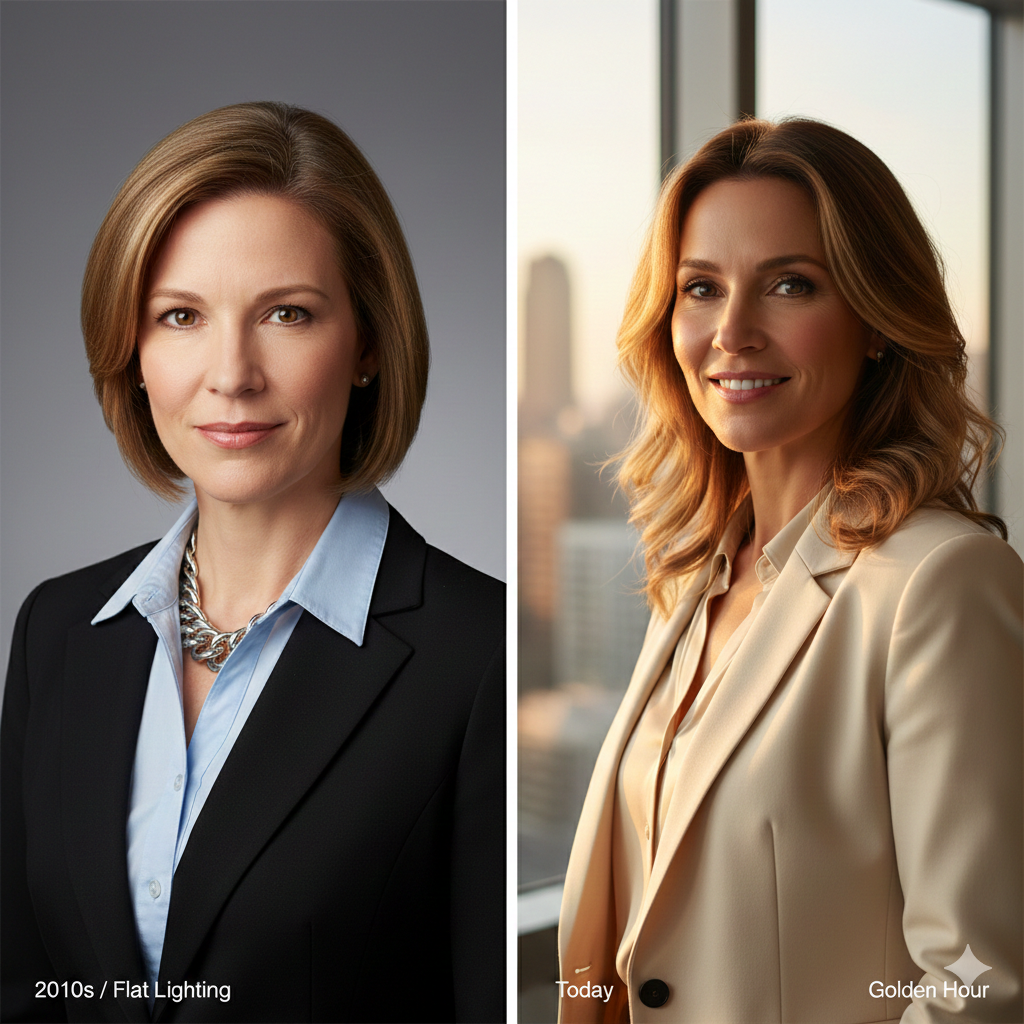
I looked at my LinkedIn headshot last month and cringed.
Stiff posture. Forced smile. Generic gray backdrop. It looked like everyone else’s photo, which meant it looked like no one at all.
That headshot was three years old. And in those three years, something shifted. The buttoned-up, sanitized corporate portrait started feeling less “professional” and more… forgettable.
Here’s what I’ve noticed: The professional women getting noticed, landing speaking gigs, attracting clients, getting recruited aren’t using those old-school headshots anymore. They’ve figured out something the rest of us missed.
A modern professional headshot isn’t about looking corporate. It’s about looking like yourself, just intentionally.
Let me show you what that actually looks like.
The Old Rules Don’t Apply Anymore
For decades, the professional headshot formula was simple: neutral background, conservative clothing, pleasant-but-restrained expression. Don’t stand out. Blend in.
That made sense in a world where professionalism meant conformity.
But we don’t work in that world anymore.
Remote work shattered the dress code. Personal branding became a career requirement. LinkedIn transformed from a resume database into a content platform. And suddenly, the headshot that helped you blend in became the headshot that made you invisible.
The women I see thriving professionally have made a subtle but important shift. Their headshots don’t scream “I’m professional!” They communicate something more specific: “Here’s who I am, and here’s the energy I bring.”
That’s a different goal entirely.
What Actually Works Now: 5 Ideas Worth Stealing
After studying hundreds of LinkedIn profiles, talking to photographers, and testing different approaches myself, I’ve identified patterns. Here’s what modern professional headshots for women actually look like when they work.
1. The “Approachable Expert”
This is probably the most versatile style and the hardest to get right.

The goal: Look competent and warm. Knowledgeable and accessible. Someone clients want to hire and colleagues want to work with.
How to nail it:
- Genuine smile that reaches your eyes (not the tight-lipped “professional” smile)
- Slight head tilt – it reads as engaged and listening
- Solid color top in a shade that flatters your skin tone
- Background that’s clean but not sterile (think soft texture or subtle gradient)
The mistake most people make? They try so hard to look “professional” that they end up looking unapproachable. The approachable expert looks like someone you’d actually want to grab coffee with.
2. The “Creative Professional”
If you work in design, marketing, content, consulting, or any field where creativity matters, your headshot can and should reflect that.
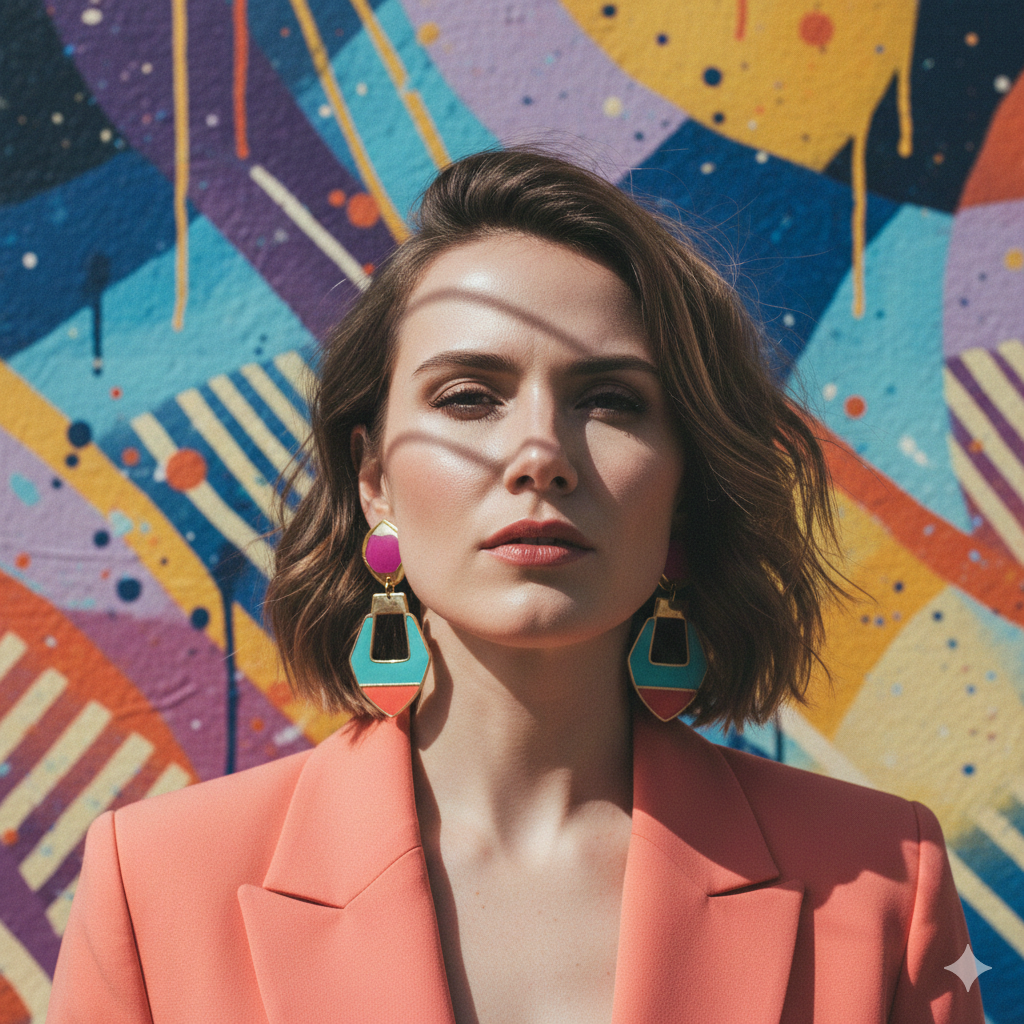
This doesn’t mean wacky. It means intentional.
Ideas that work:
- Environmental portraits (your workspace, a meaningful location)
- Pops of bold color in your clothing or background
- More dynamic poses turned slightly, leaning forward, mid-laugh
- Interesting lighting that creates depth
I’ve seen creative directors use headshots with dramatic shadows. Brand strategists photographed against colorful murals. Writers shot in bookstores.
The key is alignment. Your headshot should feel like an extension of the work you do.
3. The “Executive Presence”
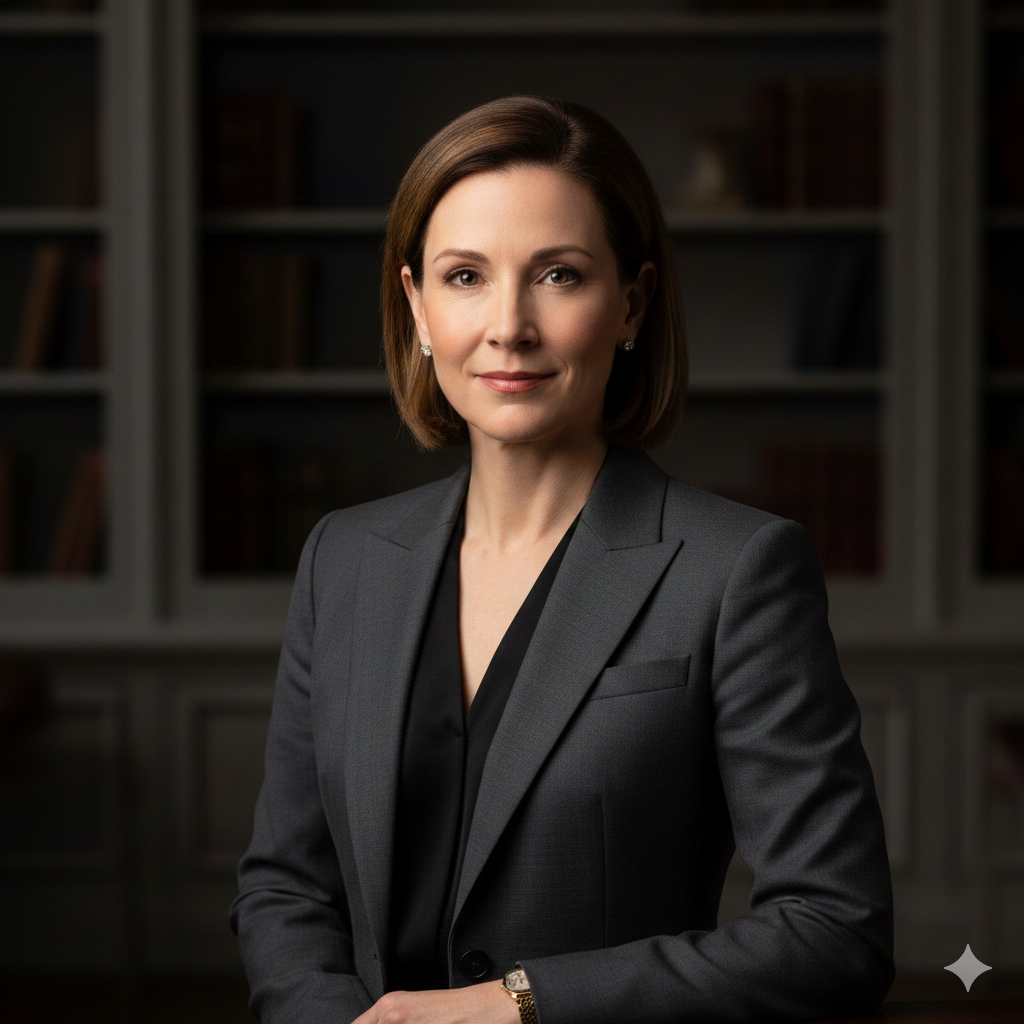
For leadership roles, board positions, or industries where gravitas matters, the headshot needs to communicate authority without coldness.
What works:
- Direct eye contact (this is non-negotiable for executive presence)
- Confident posture – shoulders back, chin slightly raised
- Darker, more sophisticated color palettes
- Minimal jewelry and accessories (let your face be the focus)
- Crisp, high-contrast lighting
The difference between “executive presence” and “intimidating” often comes down to the eyes. A genuine expression, even a subtle warmth, makes authority feel inviting rather than cold.
For women specifically, this is worth thinking about. Research shows we’re often judged more harshly for looking “too serious” or “too friendly.” The executive presence headshot threads that needle by projecting confidence with just enough warmth to feel human.
4. The “Personal Brand” Shot

If you’re building a personal brand, speaking, coaching, consulting, or content creation, your headshot needs to do more heavy lifting.
It’s not just identification. It’s marketing.
What sets these apart:
- Often more stylized and polished
- May include brand colors intentionally
- Sometimes uses wider framing (not just face, but upper body and hands)
- Expression matches your brand energy (warm and nurturing? Bold and direct? Quirky and fun?)
I follow a leadership coach whose headshot shows her mid-gesture, clearly in the middle of making a point. It captures her teaching energy perfectly. That’s not an accident.
When your headshot is working across your website, social media, podcast appearances, and press features, consistency matters. Think about what emotional response you want and work backward from there.
5. The “Unexpected Context”
This one’s riskier but when it works, it really works.
The idea: Place yourself in a context that reveals something meaningful about you.
Examples I’ve seen succeed:
- A financial advisor photographed in a rock climbing gym (her hobby, but also a metaphor for her approach)
- A tech executive shot in her home kitchen (humanizing, relatable)
- A consultant photographed walking through a city street (energy, movement)
The danger here is trying too hard. If the context feels forced or gimmicky, it backfires. But when there’s genuine alignment between who you are and where you’re photographed, it creates memorability that a gray backdrop never could.
The Technical Details That Actually Matter
Style matters. But so does execution.
A few things I’ve learned the hard way:
Lighting is everything. Natural light or professional studio lighting—both work. Harsh overhead fluorescents or that webcam-during-a-Zoom-call look? Neither works. Ever.
Resolution isn’t optional. Your headshot will be cropped, resized, and displayed at various sizes. Start with high resolution so it stays crisp everywhere.
Consistency across platforms matters more than you think. If someone finds you on LinkedIn, then visits your website, then sees you on a podcast, your headshot should be recognizable. Different photos are fine. Wildly different looks are confusing.
If you’re specifically optimizing for LinkedIn, where first impressions happen in a split second, there’s real strategy involved in what makes someone stop scrolling. Everything from framing to expression to background color affects whether people actually click on your profile. I found this AI headshot generator to be realistic and apt for expressions and styling.
The AI Option: Worth Considering?
Here’s where things get interesting.
Traditional headshots require scheduling a photographer, booking a location, doing hair and makeup, and hoping you have a good photo day. It’s a production. And if you don’t love the results? Start over.
AI-generated headshots have changed the calculus.
You upload some casual photos. The AI generates professional-looking headshots in various styles. You pick your favorites. Done in hours, not weeks.
Is the quality there? Increasingly, yes. I’ve seen AI headshots that are genuinely indistinguishable from professional photography. And for certain use cases, especially when you need options quickly or want to test different styles before committing to a traditional shoot, comparing AI headshot tools is worth your time.
The technology isn’t perfect for everyone. But it’s no longer a gimmick, either.
The Real Point
Here’s what I keep coming back to:
Your headshot is often the first impression you make. Before the interview. Before the meeting. Before anyone reads a word you’ve written.
And first impressions aren’t about looking “professional” in some generic, sanitized way. They’re about looking like the specific professional you are.
That might mean approachable warmth. Or creative edge. Or executive authority. Or personal brand energy.
But it definitely means something more specific than “person in front of gray backdrop, smiling.”
The women getting noticed have figured this out. Their headshots don’t just identify them. They introduce them.
That’s the difference worth chasing.