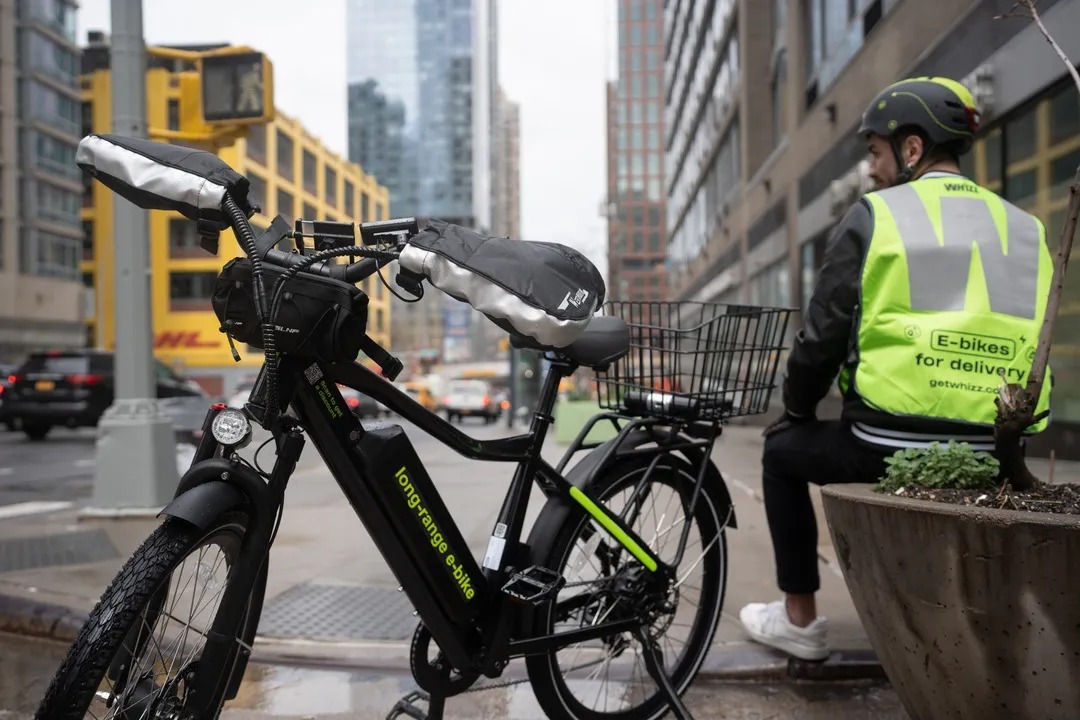
For food delivery platforms, local logistics fleets, and regional distributors, choosing the right delivery ebike OEM manufacturer is no longer just a sourcing decision—it is an operational one.
In 2026, delivery ebikes are expected to handle longer routes, heavier payloads, and near-daily usage with minimal downtime. From practical B2B experience, the most common mistakes happen early: selecting a factory based on price alone, ignoring certification readiness, or underestimating how delivery applications differ from consumer riding.
A reliable OEM partner should not only supply bikes but also understand how delivery fleets operate under real-world pressure.
Why Delivery Ebikes Require a Different OEM Approach
Delivery ebikes experience significantly higher stress levels than commuter or leisure models.
Fleet bikes typically operate:
● 6–10 hours per day
● In stop-and-go traffic
● On uneven urban roads
● Under varying weather conditions
For example, a typical long-range delivery configuration now includes:
● 48V 500W rear hub motor (45Nm torque)
● Dual 48V 15Ah battery setup (720Wh + 720Wh)
● Total capacity of 1440Wh
● 20” × 3.0” wide tires for stability under load
● 60mm suspension fork for shock absorption
● Mechanical disc brakes for easy servicing
● Shimano Tourney 7-speed drivetrain
These specifications are not about performance marketing—they are about operational durability.
A 500W rear motor with 45Nm torque ensures sufficient power for frequent acceleration with cargo. Each 48V 15Ah battery provides 720Wh (48 × 15), resulting in a combined total of 1440Wh in a dual-battery configuration. This significantly reduces charging frequency and supports extended delivery shifts without mid-day battery swaps.
From a manufacturing standpoint, this means:
● Battery systems must prioritize range stability over peak speed
● Frames must be reinforced for daily load-bearing
● Components must be selected for maintenance efficiency, not aesthetics
This is why working with a delivery-focused OEM manufacturer directly impacts total cost of ownership.
Key Factors B2B Buyers Should Evaluate
MOQ Flexibility for Bulk Orders
Fleet growth rarely happens in a straight line. Some operators begin with 30 units; others scale to hundreds within months.
Factories supporting 30–200 units per model offer clear advantages:
● Smaller fleets can validate performance before scaling
● Growing platforms can expand without changing suppliers
● Distributors can better manage inventory risk
In many cases, MOQ flexibility indicates a factory’s willingness to build long-term partnerships rather than chase single large orders.
How OEM Experience Impacts Fleet Reliability
Experienced delivery-focused manufacturers typically:
● Track real-world failure points across fleet deployments
● Adjust motor controller settings based on rider usage
● Optimize battery management systems for high-cycle durability
● Reinforce frames for repeated load stress
For example, combining a 500W rear motor, 1440Wh battery capacity, and 20” × 3.0” wide tires creates a platform designed for urban cargo stability—not recreational riding.
This operational mindset is what fleet buyers should prioritize when selecting a delivery ebike OEM manufacturer.
Common Mistakes B2B Buyers Should Avoid
Even experienced buyers sometimes:
● Select the lowest-cost factory without analyzing lifecycle cost
● Ignore spare parts supply planning
● Over-customize before validating real routes
● Underestimate certification timelines
● Focus on motor wattage but overlook battery capacity
In practice, inadequate battery sizing or underpowered torque often leads to rider dissatisfaction and reduced daily delivery capacity.
Conclusion
Choosing the right delivery ebike OEM manufacturer in 2026 requires an operations-first mindset.
Technical specifications such as:
● 48V 500W motor (45Nm torque)
● Dual 48V 15Ah batteries (1440Wh total)
● 20” × 3.0” cargo-stable tires
● Mechanical disc brakes
● Shimano 7-speed drivetrain
● 60mm suspension fork
are not marketing details—they are operational decisions.
B2B buyers who evaluate OEM partners based on durability, certification readiness, customization capability, and production stability consistently achieve:
● Lower downtime
● Reduced maintenance cost
● Better rider performance
● Smoother fleet scaling
- For delivery-focused businesses, the right OEM partner is not just a supplier—it becomes part of the operational backbone.