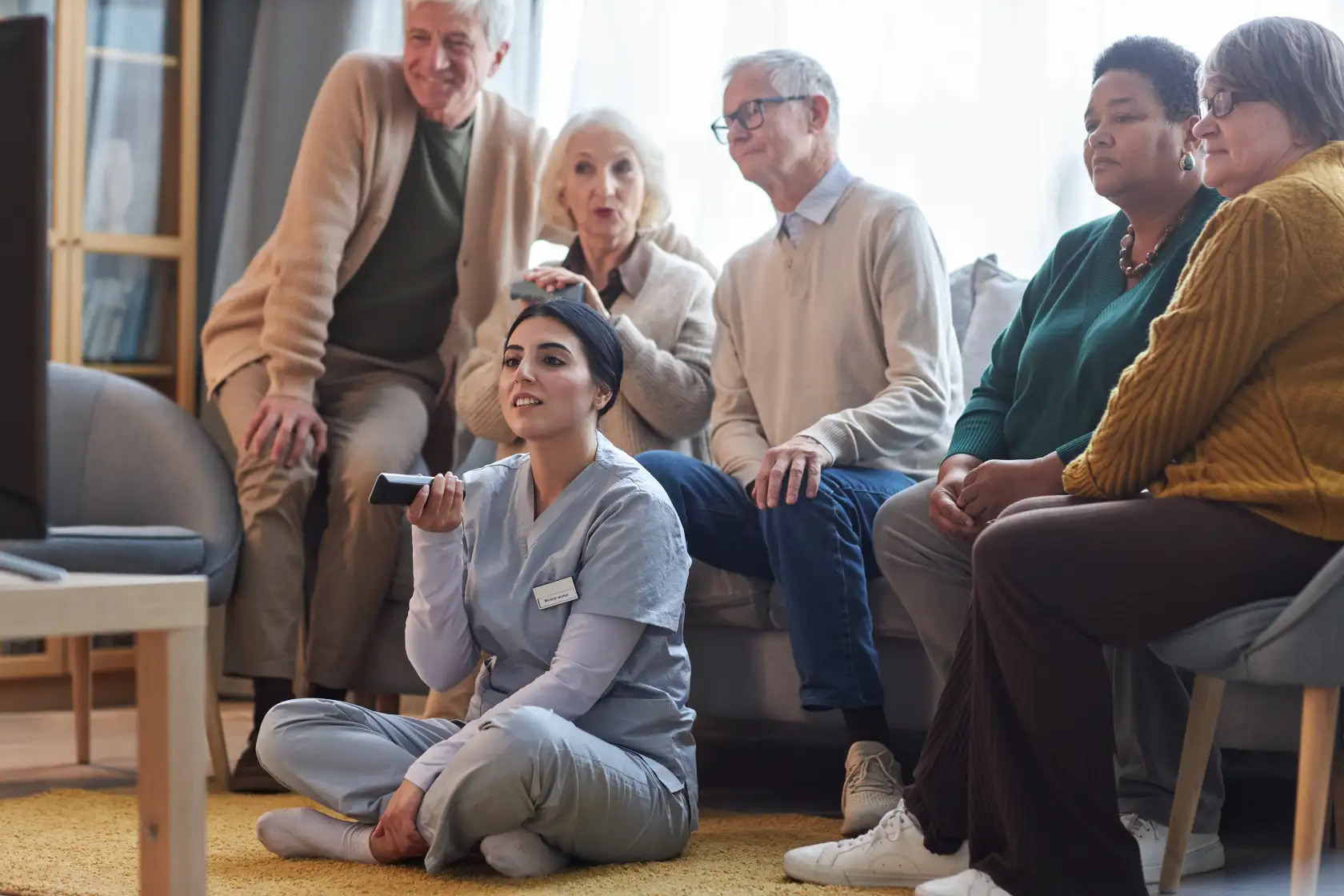
The shift from institutional settings to the home as the setting of aging/long-term recovery is changing healthcare. The majority of people want to age/recover at home. More than wanting to age/recover at home, they want to do so comfortably, with dignity, and with autonomy. While the desire to age/recover at home may be present, there is much more required than simply having a willingness. There is also a need for specialized technologies and professional supports to assist in the transition. Thus, the home is becoming a technologically advanced centre for long-term health and wellness. The emergence of home-based care represents a major advancement in the societal infrastructure of our country.
Defining the home as a clinical sanctuary
For many years, the home was viewed solely as a location for sleep and family dinners. Today, the home has evolved into a principal location for medical rehabilitation. This shift occurs primarily because patients generally heal better in environments they know. Families are purchasing equipment that mirrors what exists in hospitals. Beds designed specifically for medical use and various types of mobility devices enable families to easily transition from hospital care back to their private residences. Instead of cold, unpersonalized corridors, patients now enjoy the warmth of their private living space.
In essence, technology has removed the conflict between safety and comfort. Technology assists in ensuring that “Independence,” does not equate to “risk.”
-
Lighting systems that adjust automatically reduce the likelihood of falls when moving around later at night.
-
Through voice commands, Smart home systems allow users to control their environment.
-
Medication dispensers that automate dosage ensure that medications are always taken.
-
Monitoring systems that permit remote tracking allow physicians to monitor patients’ progress while still off site.
Overcoming obstacles relating to limited mobility
Mobility is central to maintaining an independent lifestyle. When an individual lacks sufficient mobility to function independently, his/her world rapidly shrinks. Manual transfers are inherently risky due to limited strength. Mechanical assistance removes this obstacle for families seeking to create safe homes. Many families seek out patient lift rentals to address this issue. These lifts enable caregivers to transfer loved ones without straining themselves.
By utilizing a mechanical lift, both the caregiver and the patient conserve their remaining energy reserves. Furthermore, mechanical lifting eliminates the skin irritation and bruises frequently associated with manual lifting.
-
Sliding under most standard bed frames, U-shaped bases provide additional flexibility for lifts.
-
Provided by padded slings, the user is provided with a safe and comfortable cradle to lie in.
-
Lifting the user’s weight is done by hydraulic or electric motors on the lift.
-
Emergency release valves provide protection in case of a power failure allowing the user to be lowered.
Equipment options for short Term use
Not all independent living arrangements are intended to be permanent. Some people may only require assistance for a short time (e.g., post-surgery) before returning to normal functioning. In such cases, renting highly specialized equipment is usually the most practical and financially savvy option. Renting a Hoyer lift enables families to obtain the highest level of care technology available today without being committed to owning it long Term. Rental companies also take care of the upkeep and sanitation of equipment coming into a home, thus ensuring each piece of equipment meets clinical standards for cleanliness and functionality.
-
Many rental companies offer same-day delivery for emergency hospital discharges.
-
Each rental includes technical support/training so the family knows how to operate the lift safely.
-
Rentals can be extended as necessary until complete healing has occurred.
Ergonomic solutions enhance caregiver health
While caregivers are a silent yet crucial part of the independent living movement, caregiving can be a physically taxing and hazardous occupation. If a caregiver sustains an injury, that caregiver’s loved one immediately loses their independence. Ergonomic solutions like renting a Hoyer lift protect the whole household from harm instead of just the patient. By using mechanical advantage rather than physical effort (bending/pulling), caregivers are able to perform their duties in relative safety and remain healthy for an extended duration.
Locally sourced logistical support
You should not have to worry about reliability when you’re already stressed from dealing with a crisis. Many families start their search for reliable equipment by searching online for “patient lift rental near me.” Locally sourced equipment providers offer advantages of convenience and personalized customer service. With locally sourced providers, they’ll deliver quickly if you need to adjust rented equipment. Also, local providers are familiar with typical residential layouts in your area.
Therefore, locally sourced support serves as a security blanket for the home care system. Having a trusted local partner nearby frees families’ resources for what matters most – supporting their loved ones emotionally during their recovery.
-
Local providers typically have showroom locations where you can test equipment before purchase/rent
-
Quick delivery helps prevent delays in hospital discharge process
-
On-site assembly guarantees that each piece of rented equipment is properly secured
-
Experienced staff members are able to recommend the best slings for your specific needs.
Autonomy = improved mental health
Independent living encompasses far more than just the ability to physically navigate; it also refers to mental well-being. Individuals who maintain some degree of control over their daily routines tend to experience greater satisfaction with their lives. Even simple actions, like moving from the bed to the living room, can have a positive impact on a person’s outlook. Additionally, interacting socially with family members in shared spaces reduces feelings of social isolation. Small victories in mobility translate into substantial improvements in overall quality of life.
Future of smart home-based care
A key component of the next generation of independent living will involve integrated data collection and analysis capabilities. We’re witnessing increased adoption rates of “connected” lifts/beds capable of tracking utilization patterns. Systems connected in this manner can trigger alerts to a family if the equipment isn’t being utilized as scheduled. Essentially, this technology creates an invisible form of support that provides families with an additional layer of reassurance regarding their loved ones’ ongoing care needs. As more and more of these tools become widely accessible, the “discharge dilemma” will continue to diminish.
-
Weight changes tracked over several weeks via sensors embedded in lifts.
-
Bedside units enabled with Bluetooth connectivity can be remotely controlled via smartphones.
-
Artificial intelligence-driven systems that detect falls can initiate contact with emergency responders even if the user cannot.
Conclusion
The rising trend towards independent living illustrates the continually evolving role that advances in healthcare technology play. We no longer regard medical crises as an opportunity to relocate permanently into institutions. Rather, we utilize tools such as Hoyer lift for rent to facilitate safe transitions back into homecare settings. For families requiring temporary or long Term support, finding a local patient lift rental is typically the initial step toward achieving Independence. Mechanical aid products (e.g., patient lifts) not only promote safety among patients/families but also among caregivers.