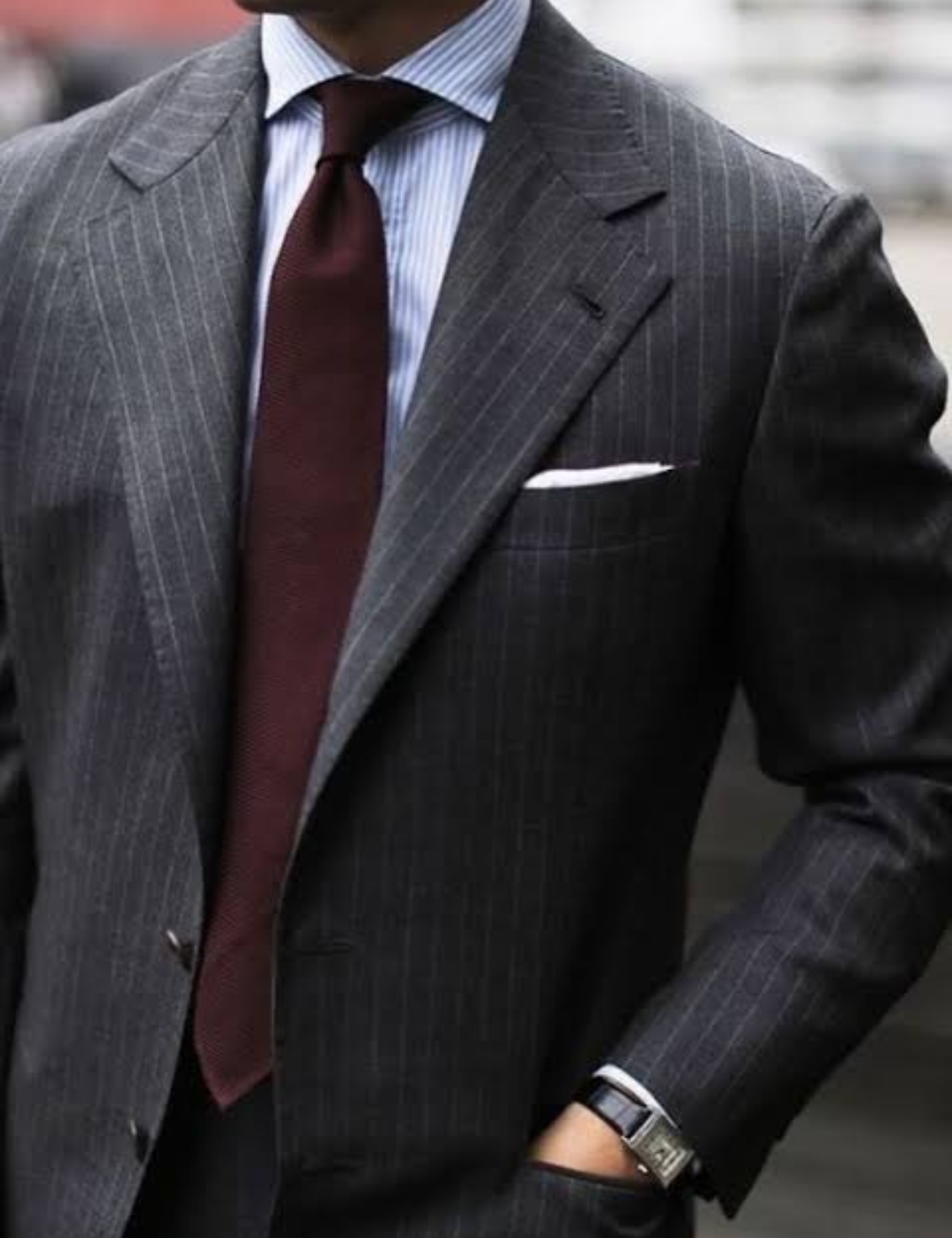
The double-breasted jacket hanging in your closet carries battle-tested DNA. Its overlapping front panels, peaked lapels, and structured shoulders didn’t emerge from fashion designers’ imaginations but from military necessity, evolving through centuries of warfare before civilians adopted them as symbols of authority and style. Understanding this martial heritage reveals why certain design elements persist and what they still communicate today.
Naval Origins and Practical Design
The double-breasted jacket traces its lineage to 18th-century naval uniforms, where sailors needed garments that provided extra protection against harsh maritime conditions. The overlapping front created a double layer of fabric across the chest and torso, crucial for warmth when spending hours on deck in Atlantic storms. The high button stance allowed sailors to fasten jackets completely, sealing out wind and spray.
Naval officers’ uniforms featured peaked lapels that could be raised and buttoned across the throat for additional weather protection, though this functionality gradually became purely decorative. The six-button configuration, still standard on many double-breasted jackets, originally served practical purposes: buttons arranged in two parallel columns of three distributed stress across multiple closure points, reducing the likelihood of buttons tearing free during physical work.
These functional origins explain why double-breasted jackets maintain such structured, almost architectural construction. They weren’t designed for comfort in climate-controlled offices. They were engineered for durability and protection in genuinely harsh conditions.
The design also provided adaptability. Sailors could fasten the jacket left over right or right over left depending on wind direction, keeping the opening away from prevailing weather. This reversibility influenced the symmetrical button arrangement we see in modern suits for men today.
Military Rank and Visual Hierarchy
By the 19th century, double-breasted designs became closely associated with military rank and authority. Officers across European armies adopted double-breasted coats as part of dress uniforms, the overlapping front providing a canvas for displaying medals, ribbons, and insignia. The symmetrical button arrangement created visual formality that single-breasted designs couldn’t match.
This association between double-breasted garments and authority transferred directly to civilian contexts. When men wanted to project power, confidence, and leadership, they adopted military-inspired tailoring. The double-breasted suit became the uniform of bankers, industrialists, and political leaders throughout the early 20th century, not coincidentally during an era when military service was nearly universal among elite men.
Peak lapels, another military holdover, further emphasized this authority connection. While notch lapels create a break in the line from collar to hem, peak lapels point upward, drawing the eye toward the face and creating a more aggressive, commanding silhouette.
World War Influence on Civilian Fashion
Both World Wars profoundly influenced men’s tailoring, accelerating the transfer of military design elements into civilian wardrobes. Men returning from service brought comfort with structured, authoritative clothing. Tailors responded by adapting military cuts for civilian contexts, softening extreme structure while maintaining the powerful silhouette.
The 1940s saw peak popularity for double-breasted suits, when virtually every professional man owned at least one. Wartime fabric rationing actually enhanced the double-breasted jacket’s appeal because its overlapping front created an impression of substance even when made from lighter materials. The design literally did more with less.
Post-war prosperity further embedded double-breasted styling in business culture. Corporate executives and politicians favored the authoritative silhouette, associating it with wartime leadership and masculine capability. For decades, the double-breasted suit served as visual shorthand for power and traditional masculine values.
The Decline and Resurgence Cycle
By the 1990s, double-breasted jackets had acquired dowdy associations, seen as relics of obsolete corporate culture. The rise of business casual made the assertive formality of double-breasted designs feel excessive. Single-breasted suits dominated, offering easier wearability.
This decline reflected broader cultural shifts away from rigid hierarchies. The same qualities that once made double-breasted jackets appealing, their association with military authority, became liabilities in an era questioning those structures.
However, fashion cycles inevitably resurrect past styles. Contemporary menswear has rediscovered double-breasted designs, though often with modifications that soften their military severity. Modern interpretations might feature softer construction, lower button stances, or unconventional fabrics.
Structural Elements and Their Battlefield Origins
The structured shoulder on military-derived tailoring served practical battlefield purposes. Rigid shoulder lines helped uniforms maintain their shape even when soaked with rain or sweat. They also provided a platform for epaulettes, which originally held shoulder straps and equipment in place. Though epaulettes disappeared from most civilian clothing, the structured shoulder persisted.
Similarly, the relatively long length of traditional double-breasted jackets connects to military needs. Officers spent long hours on horseback, requiring jackets that provided coverage while mounted. Even after horses became obsolete in warfare, the longer jacket length remained standard.
Sleeve buttons, while mostly decorative today, originally allowed soldiers to fold back cuffs for medical treatment or rough work without removing the entire jacket. The four-button sleeve configuration became traditional because it provided enough adjustability to expose the forearm while maintaining professional appearance.
Vents, the splits at the jacket’s back hem, also originated from military needs. Side vents allowed cavalry officers to sit comfortably on horseback without bunching fabric awkwardly. Center vents served similar purposes for foot soldiers. These functional details became style preferences that persist today.
What Military Heritage Means Today
Understanding these martial origins helps decode why double-breasted jackets communicate what they do. When you wear one, you’re tapping into centuries of associations between that silhouette and authority, tradition, and masculine power. This can serve you well in contexts requiring gravitas, but it can also feel incongruous in casual environments.
The military DNA in men’s tailoring extends beyond double-breasted designs. Trench coats, field jackets, peacoats, and bomber jackets all originated as military issue before civilians adopted them. Even single-breasted suits incorporate elements from military uniforms, including notch lapels and structured canvas construction.
Making Informed Choices
Recognizing these historical roots transforms how you approach tailored clothing. That double-breasted jacket isn’t just a style choice, it’s a piece of material culture carrying specific historical and psychological associations. Whether those associations serve your purposes depends on context and intention.
For situations requiring traditional authority, the military heritage of double-breasted styling reinforces your position. For contexts demanding approachability or modernity, that same heritage might work against you. The key lies in understanding what you’re communicating through design choices that extend far beyond personal preference.
Next time you button a double-breasted jacket, remember you’re participating in a tradition that spans from naval vessels to battlefields to boardrooms, each context adding layers of meaning to what seems like simple clothing. That weight of history shapes how others perceive you before conversation even begins.